
GIA Excellent is the highest overall cut rating available from the Gemological Institute of America but doesn't account for sparkle factor or light performance.
People tend to assume that GIA Excellent cut diamonds and AGS Ideal-0 cut diamonds are comparable. However, that is not the case, as you will soon discover.
By the end of this tutorial, you will know how to select GIA Excellent cut diamonds for performance. You will also see the difference between AGS and GIA grading standards.
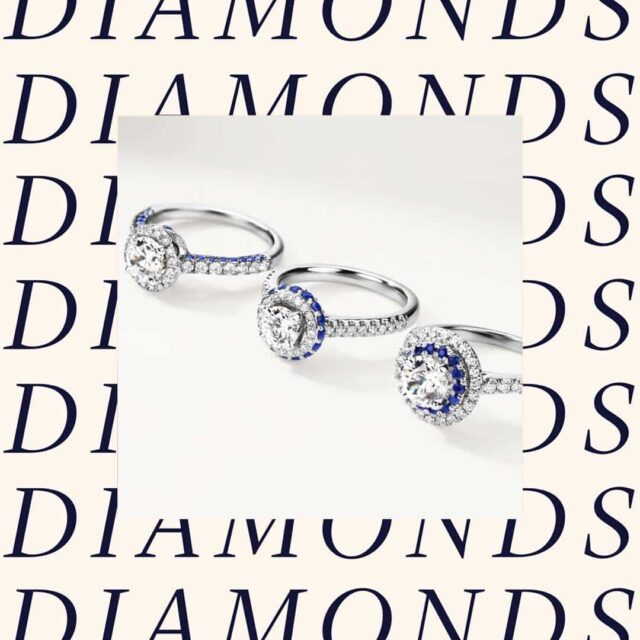
Blue Nile Engagement Rings.
GIA Excellent Cut FAQ:
GIA Excellent and AGS Ideal represent the highest grades available from each laboratory. The two labs grade polish and symmetry similarly, but proportions differ and GIA does not grade light performance.
The overall cut grade of GIA Excellent requires polish, symmetry, and proportions to meet the highest standards.
The AGS and GIA both use Sarine Technology to measure diamonds, but use different methods for determining measurements. Both labs average the sum of eight measurements per section, but then the GIA rounds them off to the nearest half a degree or half a percent in some cases.
GIA Excellent Cut Versus AGS Ideal:
The Gemological Institute of America Gem Trade Laboratory (GIA-GTL) and the American Gem Society Laboratory (AGSL) grade comparably for diamond polish and symmetry.
In my experience, a diamond with a polish and symmetry grade of GIA Excellent is likely to receive a polish and symmetry grade of AGS Ideal-0 from the AGS Laboratory.
GIA Excellent Cut Proportions:
The GIA and AGS gemological laboratories grade diamond proportions differently. Additionally, the range of proportions that the GIA relies upon is broader and less reliable than the AGSL allows.
The range of AGS Proportions is also too broad, in my opinion. In that case, it allows more light leakage to occur and a wide disparity of sparkle factor. Under those circumstances, I recommend this precise range of proportions for round brilliant cut diamonds:
Effect of Crown Angle on Diamond Sparkle Factor:
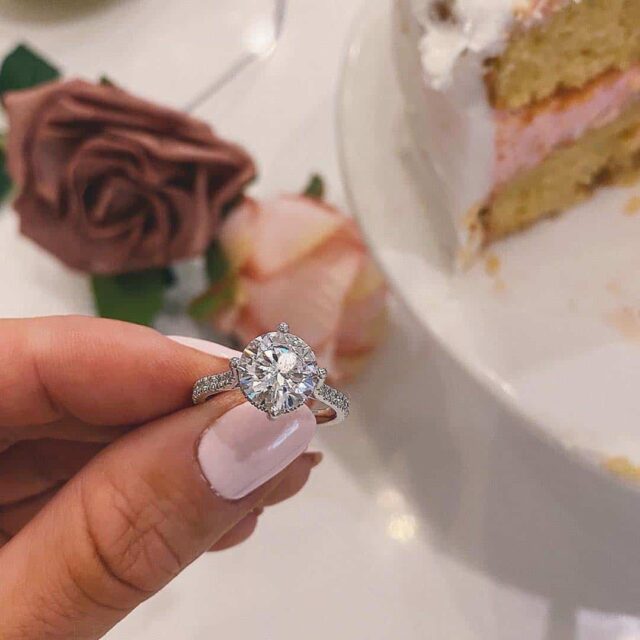
James Allen True Hearts Diamonds.
A diamond's crown angle determines the balance of brilliance and dispersion. In other words, the balance of white sparkle and fiery colors. Arguably, that is a matter of personal preference. However, I prefer to see a virtual balance of sparkle factor.
In that case, I tend to adhere to the exact proportions provided above. However, you might prefer a shallower crown angle. Such as 34-degrees because that will produce more brilliance. Or a slightly steeper crown angle up to 35.5 degrees because it creates more fire.
Of course, you're also likely to see more table facet obstruction in that case. That is why I recommend consulting with me on a stone-by-stone basis. After all, a diamond is essentially a three-dimensional model.
In that case, each variation of measurements produces slightly different results. The degree of optical precision is also a critical factor. That is the consistency of facet shape, size, and alignment. Consequently, the AGS Ideal or GIA Excellent grades do not consider this factor.
How Lower Girdle Facet Length Affects Diamond Sparkle:
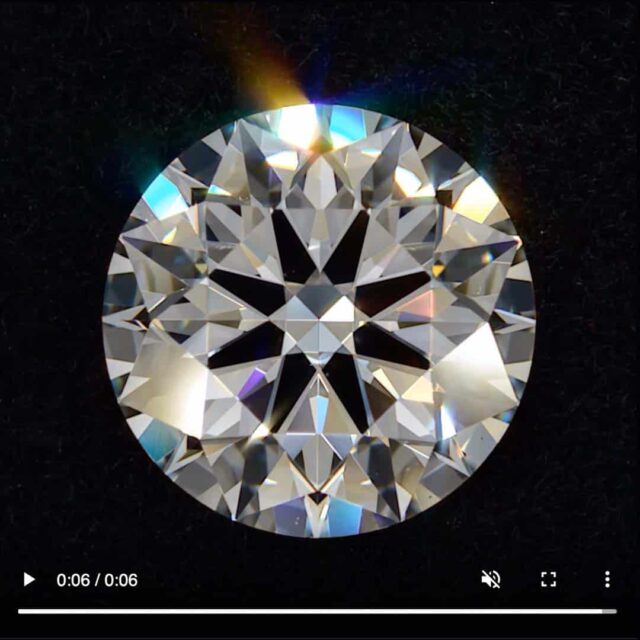
Black by Brian Gavin Diamonds.
On a round brilliant cut diamond, I prefer lower girdle facets between 75 - 78%. That is because it tends to produce more significant flashes of broad-spectrum sparkle. It also creates a more prominent arrows' pattern and more outstanding contrast brilliance.
Assuming that the range of proportions is the same, the sparkle factor will be smaller and less intense if the LGF exceeds that range. In other words, the arrows pattern will look thinner with 80-82% lower girdle facets. The sparkle factor will also be smaller and less intense.
Consequently, round brilliant cut diamonds with 75-78% LGF tend to produce broad-spectrum sparkle. In contrast, those with 80-82% lower girdle facets create a pin-fire type sparkle that is smaller.
Of course, not everybody likes the same thing. In that case, you might prefer one type of sparkle over another. If you're anything like me, then the broad-spectrum sparkle of Hearts and Arrows diamonds will be more to your liking.
The Best Places to Buy H&A Diamonds Online:
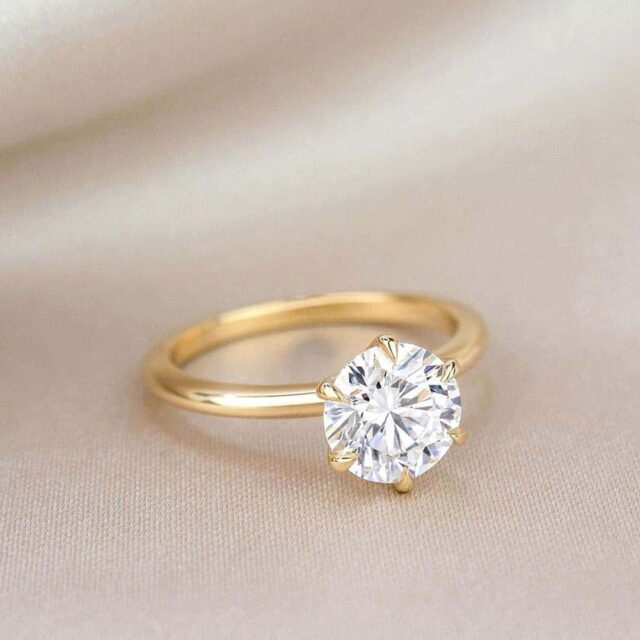
Brilliant Earth Six Prong Solitaire
Although this tutorial is about GIA Excellent cut diamonds, most H&A diamonds come with an AGS Diamond Quality Document. That's because the AGS Light Performance grading platform incorporates their Angular Spectrum Evaluation Tool.
That proprietary technology helps us to see from where in the hemisphere the diamond is gathering light. AGS ASET also enables us to determine whether or not the diamond is reflecting light evenly.
In that case, the majority of H&A diamonds are AGS Ideal rather than GIA Excellent cut. Although that's true, our tutorial on diamond color grading features examples of dual-graded diamonds. In our experience, the most significant difference between the AGS vs. GIA is in the overall cut grade.
How Important Is Diamond Polish?
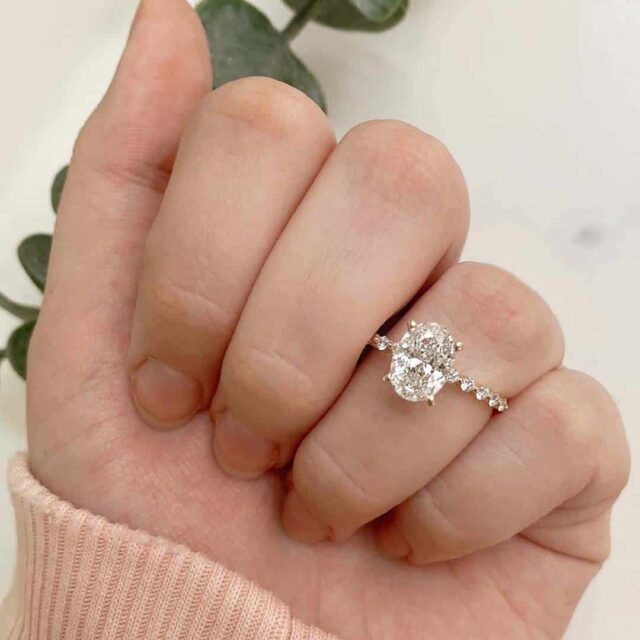
Fancy GIA-graded Diamonds With Clarity
Diamond polish grades reflect the precision of polish on the facet surfaces. It is also an indication of the diamond cutters' skill and whether they are using modern technology. The polish grade will affect the diamonds' luster and influence your depth of field.
The difference between Excellent / Ideal / Very Good polish can be challenging to detect without magnification. However, it is essential to transparency and affects how light reflects off the diamonds' surface.
Let me ask you something. Would you purchase a new car with polishing swirl marks or scratches in the paint? Me neither, and that's why I won't consider anything less than AGS Ideal or GIA Excellent cut diamonds.
If you've ever been to a car show and had the opportunity to see those cars with exceptional paint jobs, you know the difference it has upon the car's overall look.
The same principle applies to diamonds in terms of luster and appearance. In that case, the only time I consider anything less than AGS Ideal or GIA Excellent cut is when shopping for fancy-shaped diamonds. That is because so few of them reflect higher standards.
Does Diamond Symmetry Really Matter?
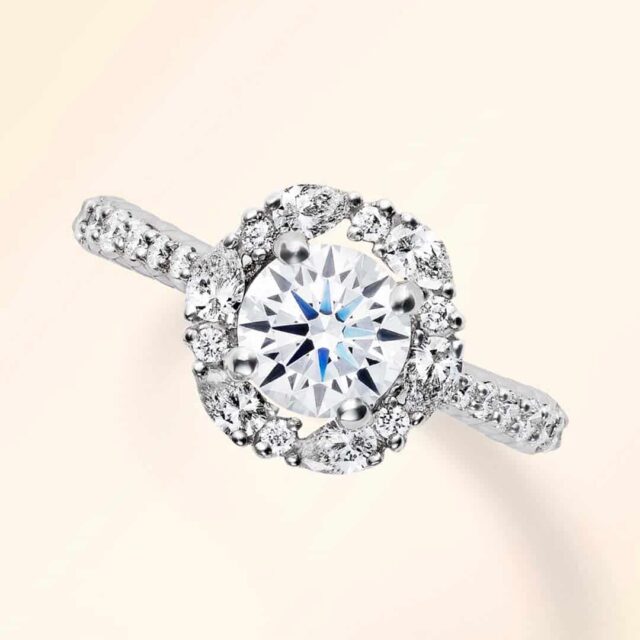
Round Marquise Diamond Halo by Blue Nile.
Diamond symmetry grades are primarily a reflection of meet point symmetry. That is the degree of precision that the facet junctions meet up with one another at the points.
It is not the same as "optical precision" (sometimes referred to as optical symmetry), which refers to the degree of precision that the facets are polished diamonds' surface. Consequently, the AGS Ideal and GIA Excellent cut grades do not account for optical precision.
You should buy a hearts and arrows super ideal cut diamond if you want the best light performance. That's because it requires a higher degree of optical precision to produce the hearts' pattern. Of course, they make H&A diamonds in varying levels of precision, as evident in the images.
Where the GIA Excellent Symmetry Grade Falls Short:
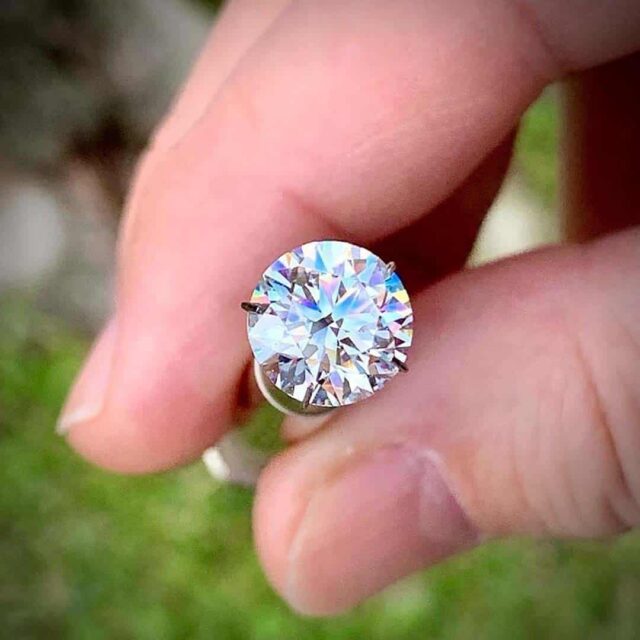
Black by Brian Gavin Diamonds.
From my perspective, Black by Brian Gavin diamonds provide the best performance. In the first place, he is the only cutter in the world with a patent for maximizing light performance in the modern round brilliant.
Secondly, I don't know anybody who fine-tunes the minor facets to the same degree of accuracy. That is where most GIA Excellent cut diamonds fall short and why they tend to leak so much light.
The way that the GIA rounds off the average measurements pave the way for wide variances. Suffice to say that the AGS Light Performance grading platform has its faults.
However, it makes it much easier to separate the wheat from the chaff in terms of performance. At this level of the game, it pays to take advantage of every resource available, such as:
It takes an incredible amount of precision and skill to produce a higher degree of optical precision. The reflector scopes named above enable us to identify the slightest variation in facet shape and alignment.
Any variation in facet structure increases the amount of light leakage. In that case, the indexing of the facets is essential to performance. That is why we evaluate symmetry from the perspective of 360-degrees.
Whereas most people primarily concern themselves with the proportions and overall cut grade. Take this next GIA Excellent cut diamond, for instance:
GIA Excellent Cut Diamond Reviews #2176526472:
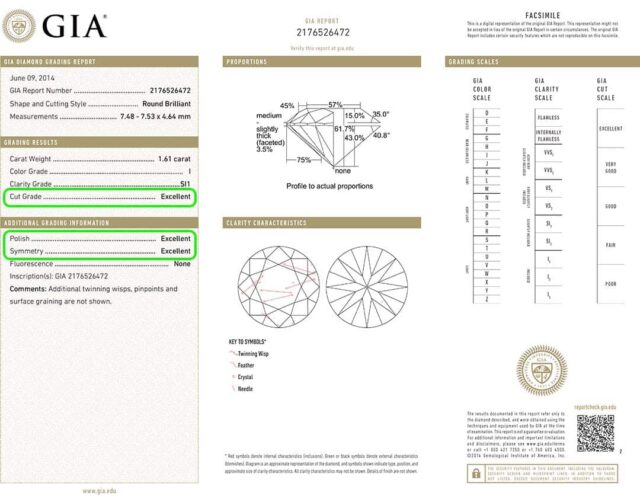
GIA Excellent Cut Diamond Report.
This 1.61 carat, I-color, SI-1 clarity, round from Enchanted Diamonds has an overall cut grade of GIA Excellent. That means that the polish, symmetry, and proportions grades are all GIA Excellent.
The diamond has a pavilion angle of 40.8 degrees with a pavilion depth of 43%. In that case, the stage is set for this diamond to exhibit a high volume of light return.
The 35-degree crown angle is a reasonable offset for this pavilion depth. As such, it should produce a virtual balance of brilliance and dispersion. Those are the industry terms for white sparkle and fiery colors.
Contrast Brilliance and Azimuth Shift:
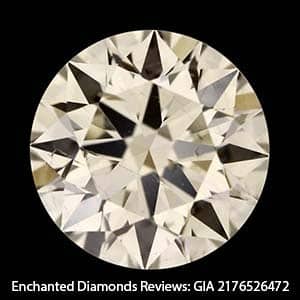
GIA Excellent Cut Subpar Optical Precision
The 75% lower girdle facet length on this GIA Excellent cut diamond should produce broad-spectrum sparkle. However, it's not going to because of the heavy-looking main pavilion facets.
You might wonder what's up with that? And why are three of the main pavilion facets transparent instead of black? You might also ask why the arrowheads do not align with the arrow shafts.
The short answer is that this GIA Excellent cut diamond exhibits subpar optical precision and Azimuth Shift. In that case, seemingly minor adjustments to the facets' indexing have significant effects on light performance.
Yee-Haw, Let's Discuss Facet Yaw:
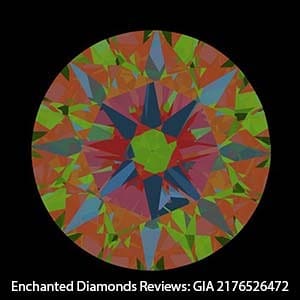
ASET for this GIA Excellent Cut Diamond
The term "Facet YAW" was coined by fifth-generation diamond cutter Brian Gavin. In short, polishing a facet on the diamonds' surface in the wrong direction creates distortion.
One side of the facet being in contact with the cutting wheel more than another creates an imbalance. We'll explain this concept more in-depth in the diamond grading tutorial on Azimuth Shift and Facet YAW.
This GIA Excellent cut diamond meets our selection criteria by the numbers. However, the clarity photograph and reflector scope images show why this particular diamond doesn't make the grade.
Notice how uneven the distribution of red, green, and blue are throughout the ASET Scope image. It's hard to ignore those telltale shifts of Azimuth Shift once you know the signs. GIA Excellent cut, um, yeah.
Understanding and Interpreting Ideal Scope Images:
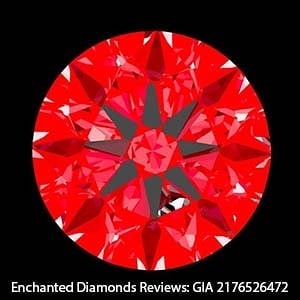
Ideal Scope Image for this GIA Excellent Cut
The Ideal Scope image for this GIA Excellent cut diamond reveals a moderate amount of light leakage. That is what the light pink and transparent sections under the table facet represent. There is even a "transparent window" visible in the relative five o'clock position.
The spacing between the arrows is also erratic, as evident in the difference between the four and ten o'clock positions. Do you see how the inverted red triangle-shaped sections are different sizes? That indicates a difference in the size of the lower girdle facets.
You will also see that the tips of the arrows are bending in different directions. There is no way that this diamond will perform well despite the proportions and GIA Excellent rating.
If you imagine the upper and lower halves of this diamond are like a jar, then it's like the lid is screwed on wrong. If this diamond were a car, then perhaps we could recall it under the Lemon Law. Maybe now you can see why we suggest that GIA Excellent might not be good enough.
Hearts and Arrows Scope Images:
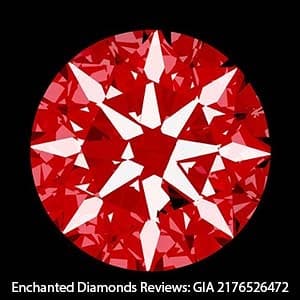
Arrows Pattern Seen Through H&A Scope
The H&A Scope enables us to judge optical precision by evaluating the consistency of the hearts' pattern. Generally speaking, it is not a good way to identify light leakage.
However, the light leakage from this GIA Excellent cut diamond is so blatant that it's hard to miss. Also, notice how completely out-of-whack the arrows pattern appears.
The funny thing is that the arrows pattern is the easiest part of the puzzle to complete. Under those circumstances, it's hard to imagine that a GIA Excellent cut diamond can look this bad.
I, personally, can't imagine how this diamond warrants an Excellent symmetry grade. However, diamond grading is subjective.
The GIA primarily considers meet-point-symmetry, not optical precision. In that way, we exist on different planets. Heck, in this case, we're in a completely different universe.
Lawn Darts and Rabbit Ears, But Not Hearts and Arrows:
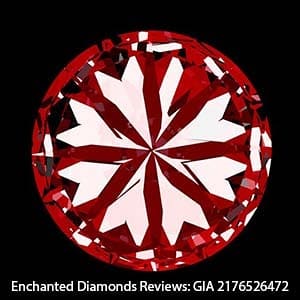
Pavilion View through H&A Scope
Finally, the lack of optical precision is apparent when we view the diamond through a Hearts and Arrows Scope. From this vantage point, it's easy to see that light is not reflecting evenly.
In that case, we know that the facet structure lacks optical precision. And yet, this diamond is GIA-graded as an Excellent cut. As that may be, there is room for improvement, and that is the point. Each characteristic of diamond grading represents a range or spectrum of inclusion.
As such, the AGS Ideal and GIA Excellent cut grades encompass a broad range of possibilities. The proportions we recommend in the One Minute Diamond Buying Guide narrow the field, but they are only the beginning.
Ultra Super Ideal vs. GIA Excellent Cut Diamonds:
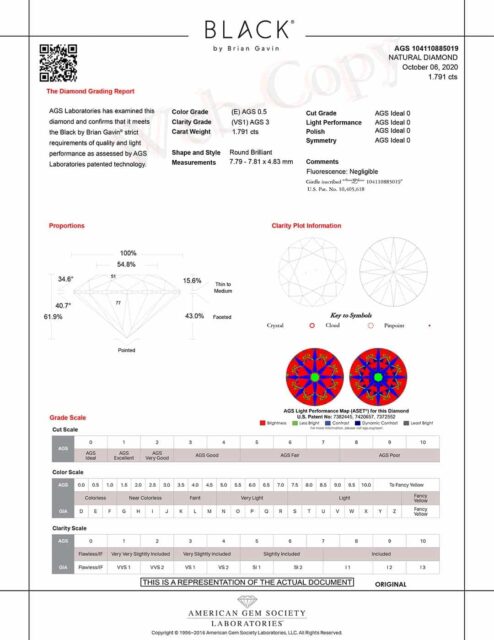
Black by Brian Gavin Diamond Advanced ASET.
Arguably, it's not fair to compare the performance of standard and ultra-super ideal cut diamonds. But we're going to do it anyway because we want to help you find a diamond that sparkles like crazy.
This 1.791 carat, E-color, VS-1 clarity, Black by Brian Gavin diamond is a good example. As stated previously, Brian Gavin is the only cutter in the world with a patent for maximizing light performance in the modern round brilliant cut diamond.
His team of diamond cutters produces the most spectacular-looking diamonds we've ever seen. Consequently, the ultra-high-resolution video and reflector scope images speak for themselves.
It doesn't take a rocket scientist to know the difference between the GIA Excellent cut diamond. Although that may be true, some GIA Excellent cut diamonds are better than others.
In that case, it pays to know what to look for and conduct your due diligence. Most of our clients buy a Hearts and Arrows diamond after completing their research.
Are GIA Excellent Hearts and Arrows Diamonds?
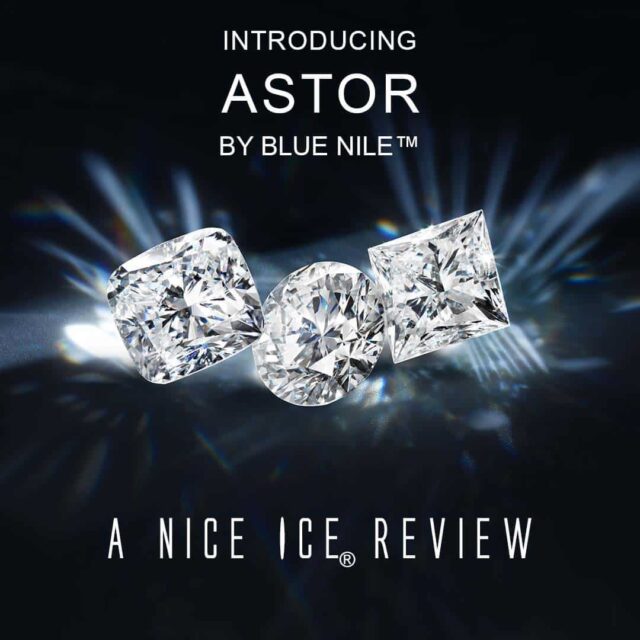
Astor by Blue Nile Diamonds.
There are GIA Excellent cut diamonds that exhibit exceptional patterns of hearts and arrows. However, it is a misconception that the excellent rating guarantees a crisp and complete hearts and arrows pattern. We prove that above beyond a reasonable doubt.
Our Astor by Blue Nile Diamond Review also shows how some GIA Excellent cut diamonds are better than others. The Hearts and Arrows Super Ideal classification represents the high-end of the spectrum.
However, you'll find that most of the cutters who produce H&A Diamonds prefer the AGS Laboratory's grading standards. That is our experience, and we specialize in the niche of super ideal cut diamonds.
In that case, we invite you to use our free Diamond Concierge Service to guarantee your success. We will help you search for diamonds and help evaluate any diamonds that you may be considering.
